
Introduction
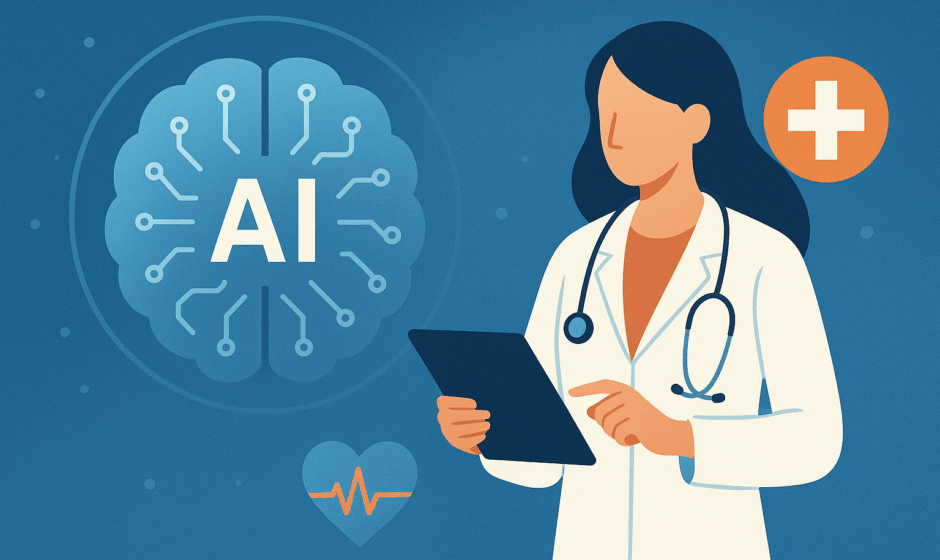
Healthcare has always been one of the most complex industries, balancing innovation with the responsibility of saving lives. In 2026, Artificial Intelligence is reshaping healthcare in profound ways, from diagnosis to treatment, operations, and patient engagement.
AI is not here to replace doctors—it’s here to empower them, streamline processes, and make care more accessible, accurate, and personalized.
Smarter Diagnosis with AI
AI algorithms now analyze medical scans, blood tests, and genetic profiles with remarkable accuracy. For example, AI systems can detect early-stage cancers, heart conditions, and diabetic retinopathy faster than many traditional methods.
Hospitals worldwide are integrating AI into radiology, pathology, and dermatology to support doctors in making faster, more reliable decisions. The result? Earlier intervention and improved patient outcomes.
Personalized Medicine
AI makes precision medicine possible by tailoring treatments to an individual’s genetics, lifestyle, and history. Instead of one-size-fits-all prescriptions, AI helps doctors craft targeted therapies.
In oncology, AI-driven insights identify which patients are most likely to respond to specific cancer drugs, reducing trial-and-error treatments and improving survival rates.
Virtual Health Assistants
Chatbots and virtual assistants powered by AI are becoming standard in healthcare. They provide patients with:
-
Appointment scheduling
-
Symptom tracking
-
Medication reminders
-
Mental health support
This reduces the burden on hospital staff and ensures patients receive consistent support outside clinical settings.
AI in Drug Discovery
Drug development typically takes over a decade and costs billions. AI is accelerating this process by predicting how molecules interact, identifying promising candidates, and simulating clinical trials.
The COVID-19 pandemic showcased the urgency of rapid drug discovery. In the future, AI-driven models will make responses to global health crises faster and more effective.
In practice, most companies are adopting hybrid models, where edge devices handle immediate data processing, and the cloud stores, analyzes, and distributes insights at scale.
AI isn’t replacing doctors—it’s redefining how they care. From faster diagnoses to personalized treatments and virtual support, AI is making healthcare smarter, more accessible, and deeply human at its core.
Administrative Efficiency
Beyond clinical use, AI streamlines hospital operations. Automating tasks like billing, patient intake, and records management frees healthcare professionals to focus more on care delivery.
AI also helps reduce medical errors by flagging potential prescription conflicts or procedural inconsistencies.
Challenges and Ethical Concerns
Despite its benefits, AI in healthcare faces challenges:
-
Data Privacy: Patient data must be safeguarded against misuse.
-
Bias in AI Models: Algorithms trained on limited datasets may yield inaccurate results for underrepresented groups.
-
Trust: Patients and doctors must trust AI recommendations. Transparency in how decisions are made is critical.
-
Regulation: Governments are still developing frameworks to ensure ethical and safe AI deployment.
Future Outlook
In the coming years, AI will enable:
-
Remote diagnostics through wearable devices.
-
Robotic surgeries with enhanced precision.
-
Global accessibility, bringing quality healthcare to underserved regions.
As AI matures, it will not only enhance care but also democratize healthcare, reducing inequalities and making advanced treatment accessible worldwide.
Conclusion
AI is transforming healthcare at every level, from diagnosis and treatment to administration and patient support. While challenges remain, the opportunities to save lives, reduce costs, and improve accessibility are unparalleled.
The future of medicine is not man versus machine, but man with machine—where doctors, empowered by AI, can deliver smarter, faster, and more compassionate care.