
Introduction
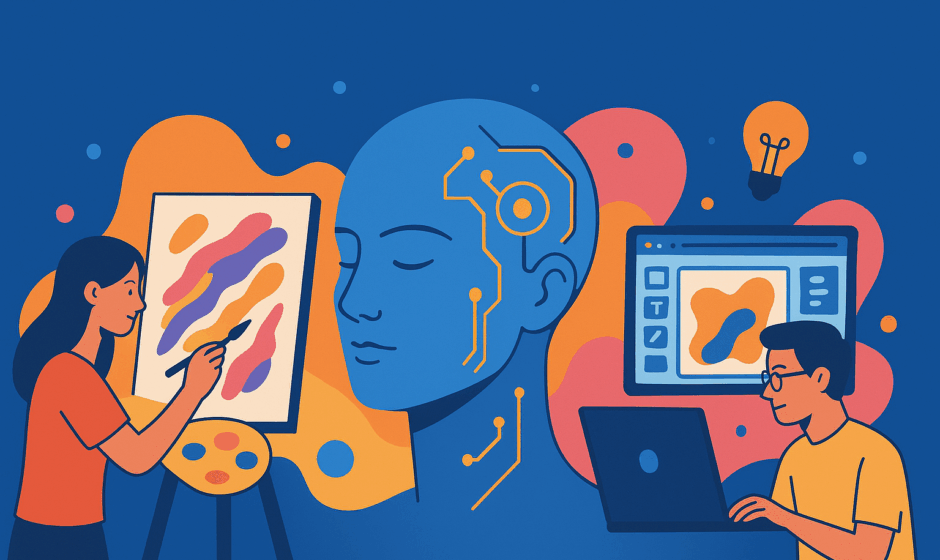
Creativity has always been a deeply human trait—shaped by imagination, experience, and cultural context. Yet, in the last few years, Generative Artificial Intelligence (AI) has stepped into the creative arena, fundamentally changing how art, music, writing, and design are produced. Once considered an experimental novelty, generative AI is now an integral part of the creative industries. It’s enabling professionals to scale their work, experiment with new ideas, and even collaborate with machines in ways that were unimaginable a decade ago.
This article explores how generative AI is reshaping different creative fields, the opportunities it offers, the challenges it presents, and what the future might hold for this exciting collaboration between human creativity and artificial intelligence.
Understanding Generative AI
Generative AI refers to algorithms—often powered by deep learning—that can produce original content such as text, images, music, or video. Unlike traditional AI systems that analyze data, generative AI creates something new by learning from vast datasets. Tools like DALL·E, MidJourney, ChatGPT, Stable Diffusion, and Runway have become widely popular, blurring the line between human creativity and machine output.
The appeal lies in their ability to generate high-quality, original work within seconds. For creative industries under constant pressure to innovate and deliver faster, this represents a massive shift.
Transforming Visual Arts & Design
Artists and designers are among the most impacted groups. Traditionally, brainstorming multiple design concepts took days, if not weeks. Today, an AI image generator can provide hundreds of variations in minutes, allowing designers to refine, combine, and reimagine possibilities at an unprecedented scale.
For example, interior designers utilize AI to visualize how a space might look with different layouts, while advertising agencies rely on generative AI to produce campaign mockups in real-time.The result is faster experimentation and lower production costs.
At the same time, many traditional artists are integrating AI into their workflows. Rather than seeing it as a competitor, they view it as a co-creator—a tool that sparks fresh ideas they can refine into unique, human-led expressions.
Music & Entertainment
A New Soundscape Music is another field where generative AI is leaving a mark. Tools like AIVA and Amper Music can compose original scores, background music for advertisements, or soundtracks for video games within minutes. Instead of replacing composers, these tools act as creative assistants, generating drafts that musicians can then personalize.
The entertainment industry is also using AI to speed up production processes. Filmmakers experiment with AI-assisted storyboarding, scriptwriting, and even editing. Special effects studios use AI to generate realistic backgrounds and characters, significantly reducing costs and time.
In some cases, AI is even being trained to recreate actors’ voices for dubbing or resurrect historical figures for documentaries. At the same time, many traditional artists are integrating AI into their workflows. Rather than seeing it as a competitor, they view it as a co-creator—a tool that sparks fresh ideas they can refine into unique, human-led expressions.
Artists and designers are among the most impacted groups. Traditionally, brainstorming multiple design concepts took days, if not weeks. Today, an AI image generator can provide hundreds of variations in minutes, allowing designers to refine, combine, and reimagine possibilities at an unprecedented scale. For example, interior designers use AI to visualize how a space might look with different layouts, while advertising agencies rely on generative AI to produce campaign mockups in real time. The result is faster experimentation and lower production costs.
Content Creation & Publishing
Generative AI is transforming the publishing industry as well. Journalists, marketers, and writers use AI-powered platforms to generate articles, ad copy, and social media posts tailored to specific audiences. Instead of spending hours drafting, they can now produce polished content in minutes.
E-commerce platforms use AI to write personalized product descriptions, while digital publishers deploy it to test multiple versions of headlines or blog posts for engagement. This ability to scale content quickly is especially valuable for industries that thrive on volume and speed.
However, ethical concerns are rising—especially around authorship and originality. Who owns a piece of writing created by AI? Can an AI-generated painting be considered art? These debates are shaping new copyright policies and intellectual property frameworks.
Gaming & Virtual Experiences
In the gaming industry, generative AI is pushing the boundaries of immersive storytelling. Game developers use AI to design dynamic environments, generate character dialogue, and even create infinite variations of game scenarios.
For instance, AI-powered procedural generation can build vast virtual landscapes that change with every playthrough. This not only saves developers time but also enhances player experience, offering near-limitless possibilities. With the rise of the metaverse, generative AI is expected to be the backbone of creating interactive and adaptive virtual worlds.
Opportunities for Creative Industries
-
- Faster Production: AI accelerates tasks like prototyping, editing, and content creation.
-
- Lower Costs: Companies save money by automating repetitive creative tasks that often inspire human creators.
-
- Accessibility: Individuals with limited resources or technical skills can now produce professional-level content.
-
- Personalization: Brands can deliver hyper-targeted creative experiences for different audiences.
Challenges & Ethical Considerations
While the opportunities are immense, generative AI comes with challenges:
-
- Originality & Copyright: Determining ownership of AI-generated works remains complex.
-
- Job Displacement: Concerns persist about AI replacing roles in design, writing, or music.
-
- Bias in AI Models: Since AI learns from existing datasets, it may replicate societal biases present in the data.
-
- Over-Reliance on Machines: Excessive dependence on AI risks homogenizing creativity, as outputs often reflect patterns rather than originality.
These challenges highlight the importance of responsible AI use—ensuring transparency, fairness, and respect for human contributions.
The Future of Human–AI Collaboration
Looking ahead, generative AI will not replace human creativity but will augment it. The most successful artists, designers, and companies will be those who learn to collaborate with AI tools rather than compete against them.
We may see new roles emerging in the creative economy: AI curators, AI art directors, or machine-learning ethicists who guide how AI contributes to creative work. Instead of eliminating jobs, AI could transform them—empowering humans to focus on higher-level storytelling, emotional depth, and cultural interpretation.
Conclusion
Generative AI is not just a passing trend—it’s a profound shift in how creativity is imagined, developed, and shared. From visual arts to music, publishing, gaming, and entertainment, it is expanding possibilities, reducing barriers, and sparking innovation across industries.
But the real power of generative AI lies in collaboration. Machines can generate, but humans give meaning. The future of creative industries will be defined not by AI replacing artists, but by artists who use AI to push the boundaries of imagination.